Event

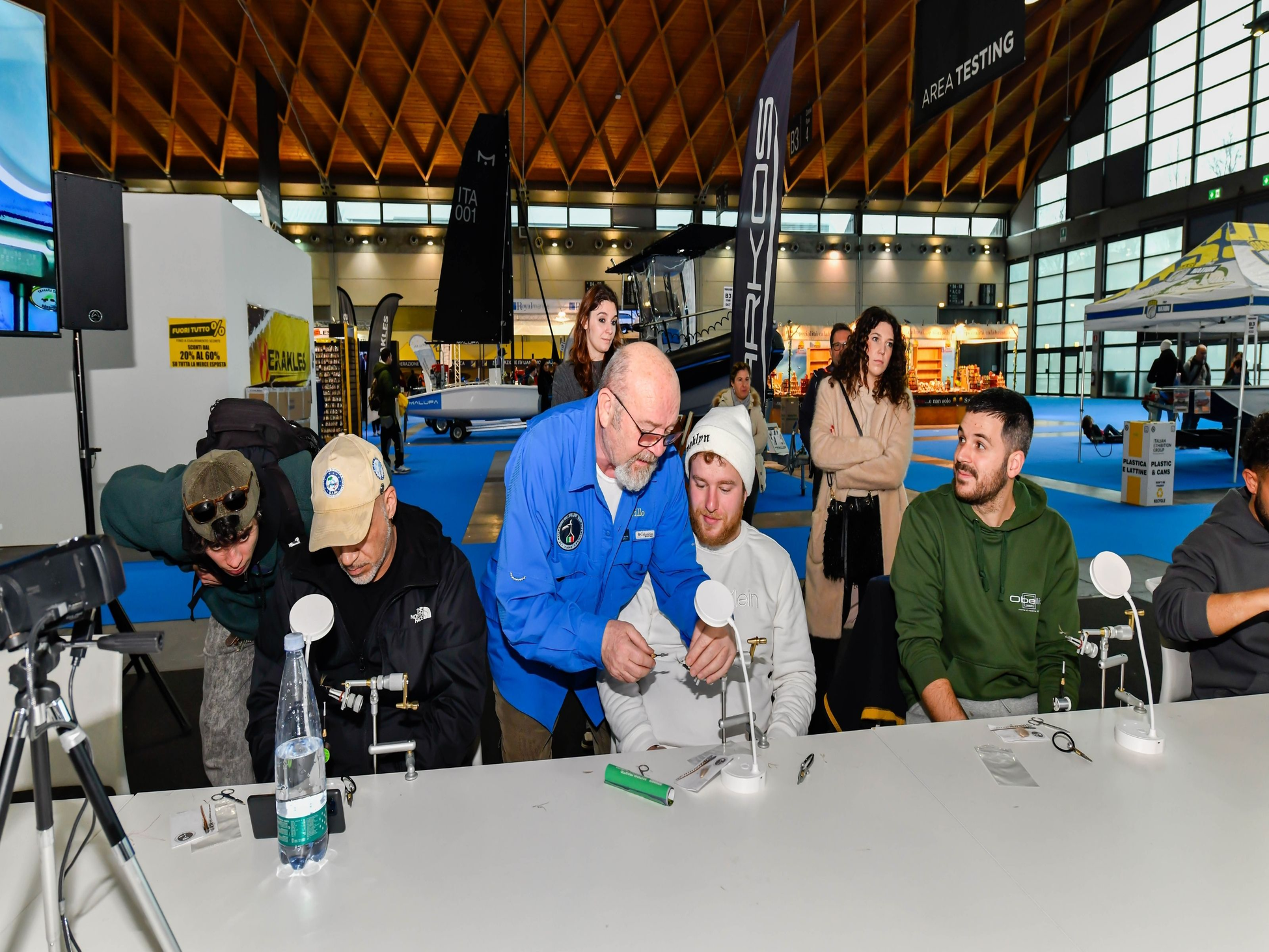
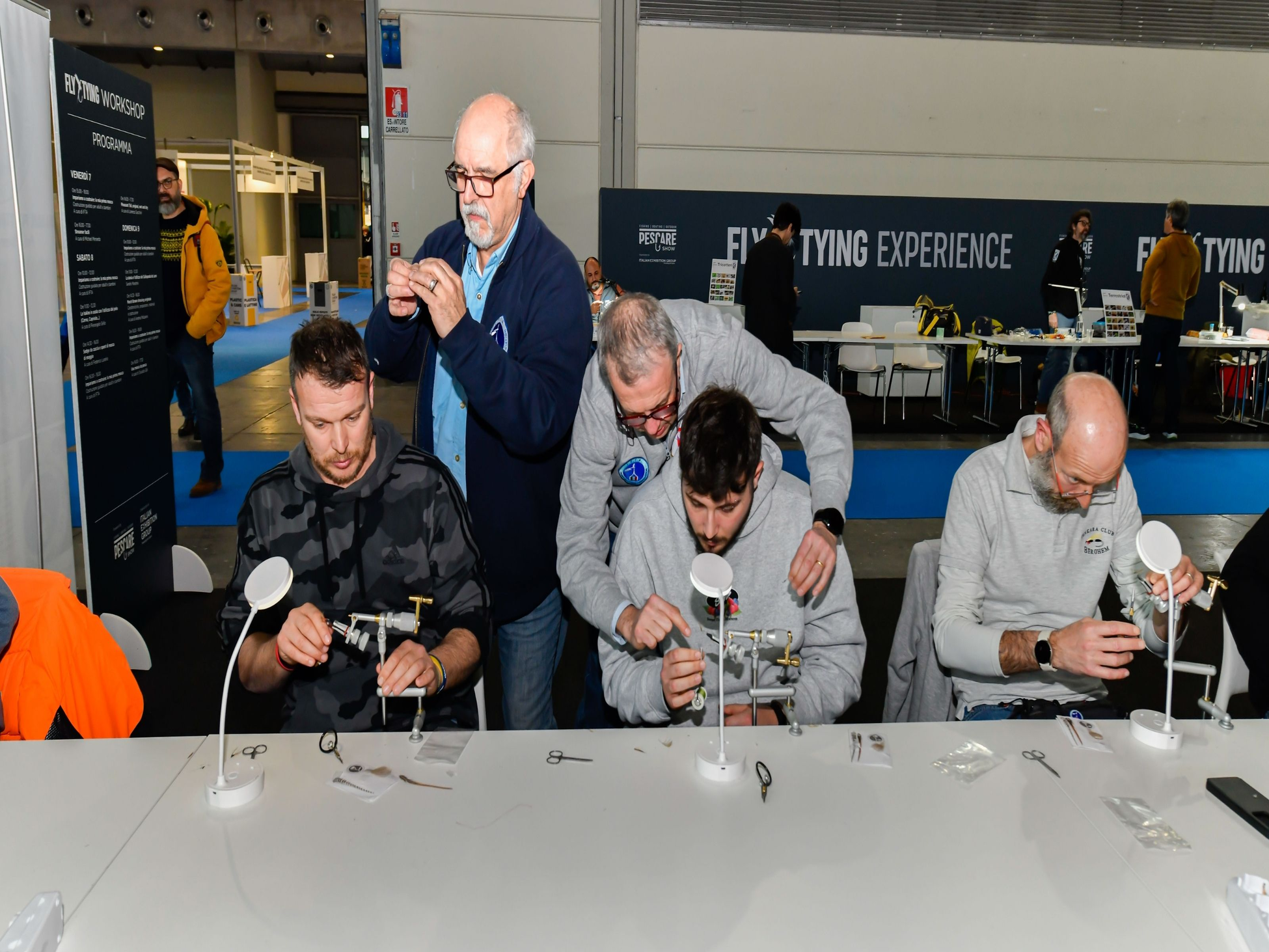
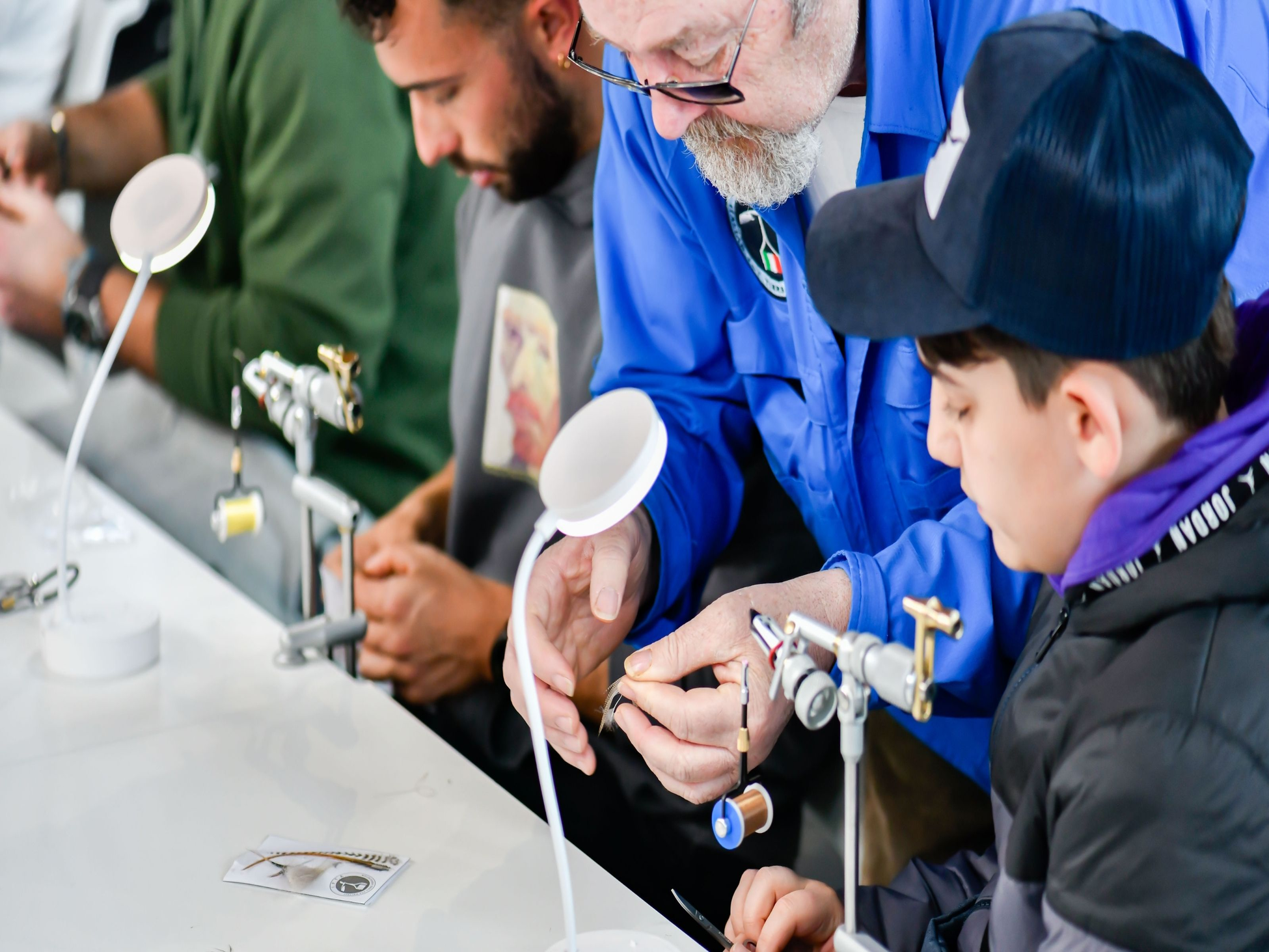
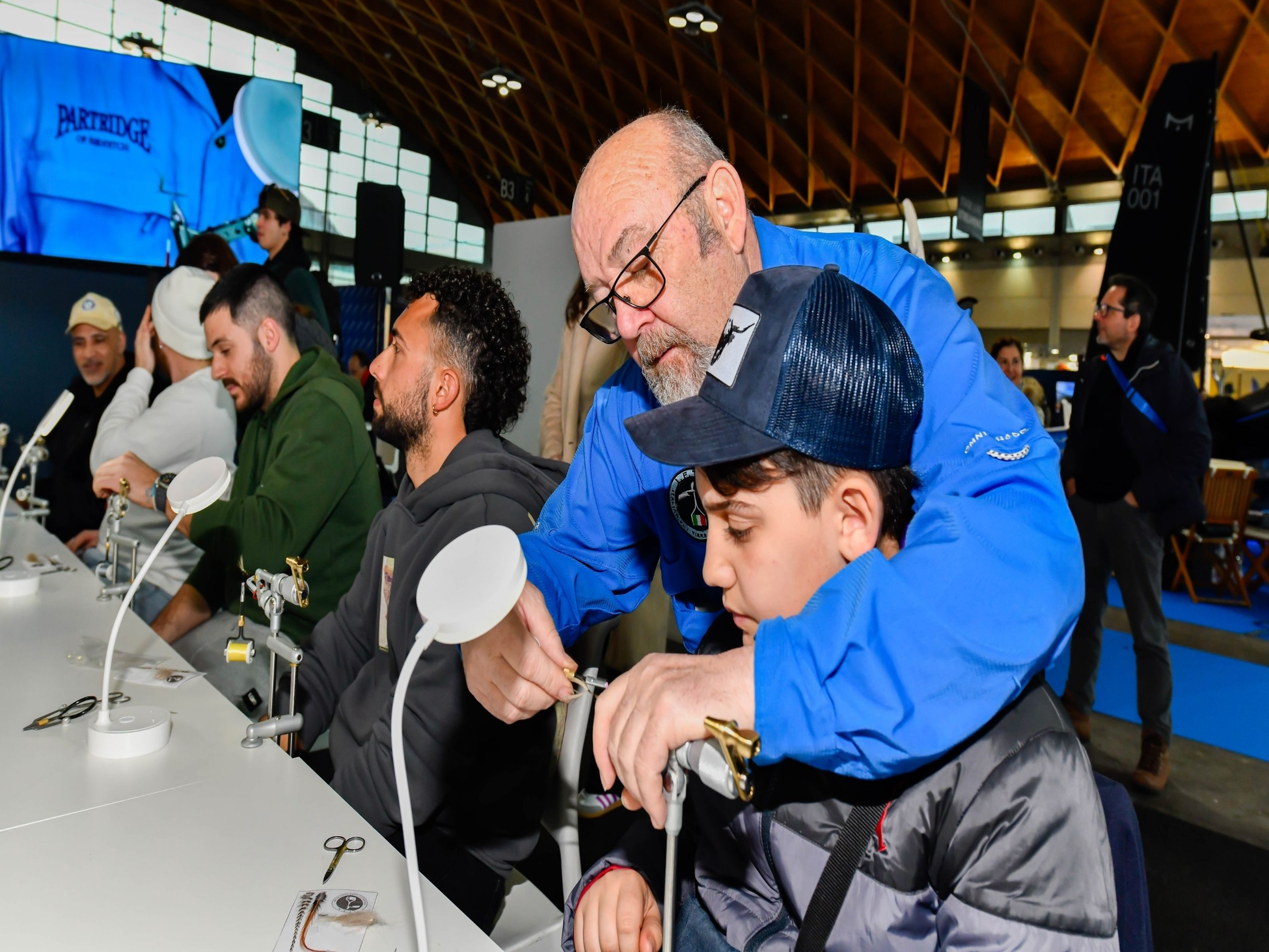
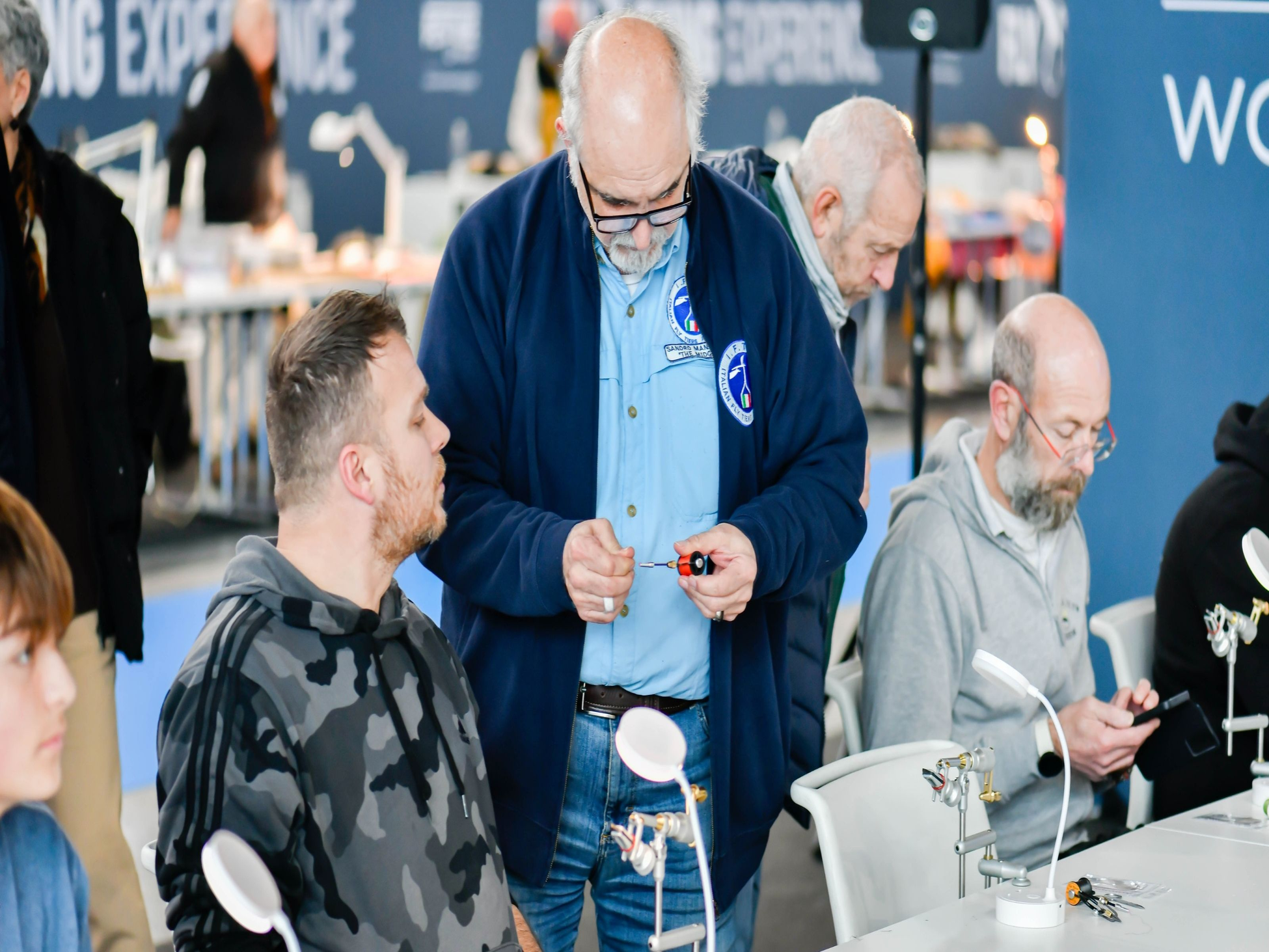
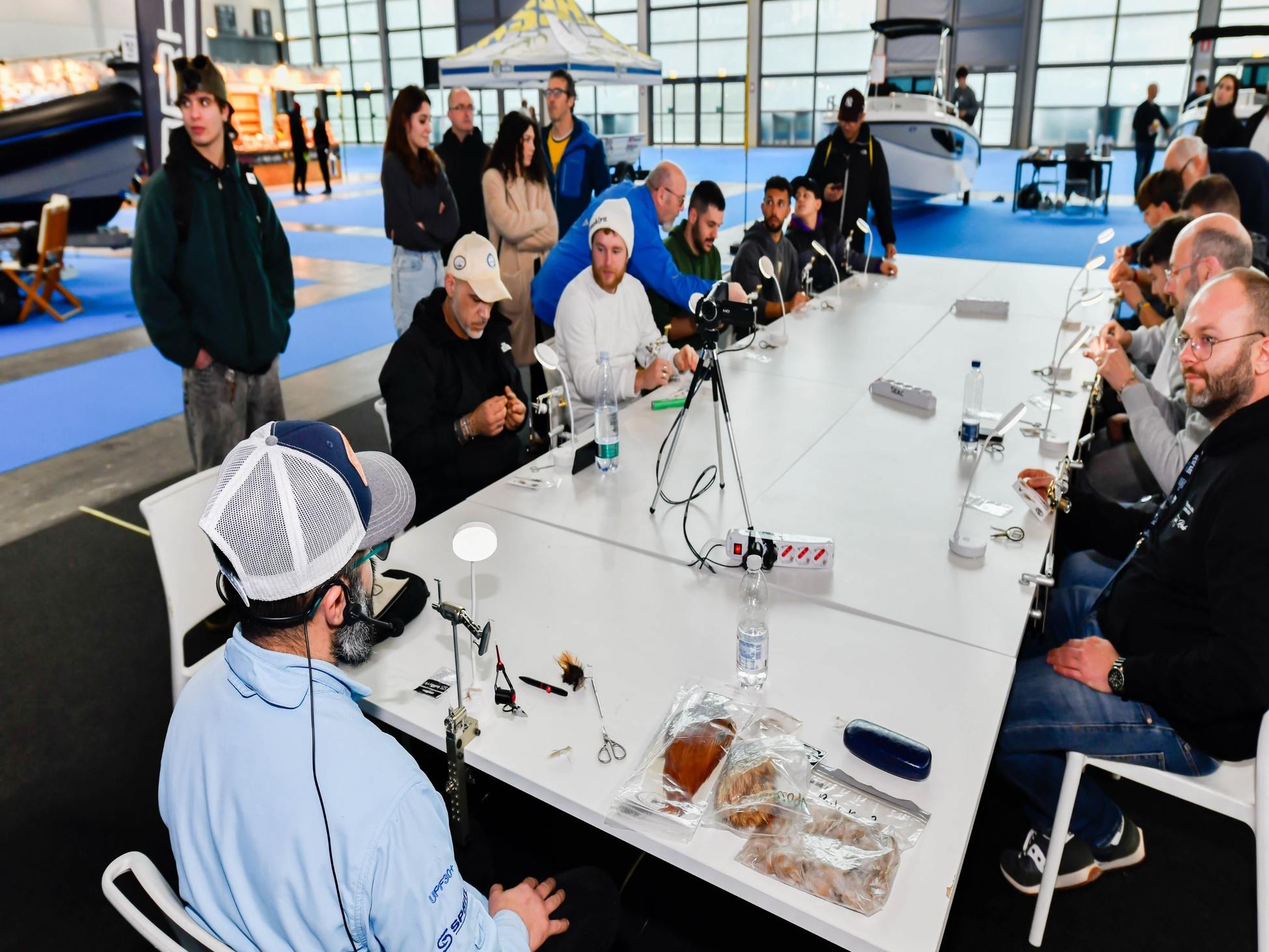
An open workshop for the public, aimed at introducing participants to the art of fly tying, guided and supervised by experienced professionals in the field.
Organized by: IFTA
13 February
14 February
15 February
Type
workshop

Recurring event
Constructors at the terminal
13 February | 3:00 pm - 6:00 pm , Hall A3 - Stand I.F.T.A.
The following people will be present at the stand: Sandro Mandrini, Pierangelo Grillo, Osvaldo Gilli, Guido Scala, Marco Toschi, Marco Bonetto, Lorenzo Sacchini, Jacopo Scalmani and Marco Gentili, along with many other guests.
Fly Tier
Sandro Mandrini , Pierangelo Grillo , Guido Scala , Marco Toschi , Marco Bonetto , Lorenzo Sacchini , Jacopo ScalmaniArpo V1
13 February | 4:00 pm - 5:30 pm , Hall A3 - Fly Fishing Workshop
A revisited version of the famous ARPO characterized by a smaller wing sac, suitable for slow currents and difficult fish.
Dressing: Hook: Light dry fly hook with long shank like TMC 100 BL from sizes 14 to 24 – Tying thread: Light or dark colors based on the chosen feather, 8/0 or even finer – Tails: Excess barbules from the CDC feather – Body: Stripped peacock quill and CDC feather – Wings: Barbules from the CDC feather previously used for the body – Head: Hare's ear dubbing
The tails are created by leaving a few barbules of the feather when folding the rachis over the hook shank.
To ensure durability, a drop of UV resin or top coat nail polish is recommended
The cul de canard feather must be proportionate to the size of the hook being used. Pay attention to the wing sac, it should not be too large.
Fly Tier
Marco BonettoConstructors at the terminal
14 February | 9:00 am - 6:00 pm , Hall A3 - Stand I.F.T.A.
Fly Tier
Sandro Mandrini , Pierangelo Grillo , Guido Scala , Marco Toschi , Marco Bonetto , Lorenzo Sacchini , Jacopo ScalmaniBuilding my first fly
14 February | 10:00 am - 12:00 pm , Hall A3 - Fly Fishing Workshop
Spider Fly
14 February | 11:00 am - 12:30 pm , Hall A3 - Fly Fishing Workshop
Spiders are among the oldest wet flies in the English tradition, originating in Northern England between the 17th and 19th centuries. They were "fisherman's" flies, not for display: simple, light, and functional. Their purpose is not to imitate a specific insect, but to suggest life, especially that of an insect emerging or struggling under the surface.
The philosophy of the spider is clear: less material, more movement, more naturalness.
The spider is a minimalist wet fly, constructed with very few elements: Light wet fly hook (#12–18) - Thin body, often made only with waxed silk thread or with a thin layer of natural dubbing - Soft hackle (partridge, woodcock, hen), wrapped with few turns - Absence of tail and proper wings
The hackle is the key element: the fibers should be few, long and mobile, capable of breathing with the current.
The spider works under the surface of the water, in natural drift. It is particularly effective in flowing waters, during hatches and on selective or less active fish.
It is fished upstream or slightly across, allowing the current to give life to the fly, but also in a "multiple fly parade", according to English tradition. No need to animate it: the spider works because it moves on its own.
Why still use spiders today: despite their ancient origin, spiders are very modern. They catch difficult fish, work with light equipment, teach how to read water, current and drift.
These are flies that educate the angler, even before catching the fish.
Fly Tier
Lorenzo SacchiniSubmerged Fly
14 February | 2:30 pm - 4:00 pm , Hall A3 - Fly Fishing Workshop
The flies called "wet flies" are primarily designed to imitate aquatic insects, in the form of nymphs, during their "hatching" moment, which constitute a fundamental part of fish diet, particularly trout and grayling.
They are constructed mainly using natural materials that absorb water more easily, to facilitate their sinking. Among the most commonly used materials are animal fur, such as hare and squirrel, and soft bird feathers like pheasant and partridge. These materials not only give a realistic appearance to the flies but also offer a nice movement in water.
Normally in fishing, they are used downstream by casting upstream and letting the artificial fly sink to the bottom, then retrieving it towards the surface in the final part of the drift.
This particular wet fly represents an mayfly almost fully transformed trying to emerge from the water, and it is used by working it just below the water surface.
Dressing: Hook: straight long shank - Tail: fibers from pheasant tail feather - Body: hare's ear dubbing - Ribbing: silk thread - Thorax, Wings: a mix of Emu feather fibers + some Chamois hair mounted in a loop - Legs: a feather from the flank of a Mallard duck.
Fly Tier
Guido ScalaEphemeral
14 February | 4:00 pm - 5:30 pm , Hall A3 - Fly Fishing Workshop
This is a generic imitation of an ephemera that is very simple and quick to create. The hen, of good quality, is a splendid and more economical substitute for the more commonly used rooster. The fibers of the hen's hackle are softer and rest on the surface film of the water without piercing it. The use of Tiemco 103 bl favors floatation as it is a hook with a very thin wire (it is not recommended to use it on sizes larger than 14 as it tends to open up), the fly works well on the surface and if well-treated floats well, but it represents a deadly bait especially in its initial sinking phases, imitating insects in distress which represent more appealing prey, especially for fish that conserve energy and only attack easily caught insects. The artificial fly can also be made in different colors by varying both the body and the hackle, excellent especially in imitating "olives".
I would like to specify that the paternity of the artificial fly is to be attributed to Marco Feliciani
Dressing: Tiemco 103 bl hook 14 - 16 - Tail dun hen hackle fibers - Body yellow tying thread - Ribbing brown 8/0 thread - Wing dun hen - Hackle dun hen
Construction phases: Using Benecchi 8/0 yellow tying thread, we move towards the bend of the hook where we tie in a bunch of dun hen hackle fibers. At the same point, we fix a piece of 8/0 brown thread. With several wraps of tying thread, we create a thin and conical body, narrower towards the tail and thicker towards the eye. We then wrap the brown thread about 5 turns. We take a dun hen hackle of the correct size proportionate to the hook, first creating a small wing and then wrapping it around the hook to create the legs.
Fly Tier
Marco ToschiConstructors to the terminal
15 February | 9:00 am - 6:00 pm , Hall A3 - Stand I.F.T.A.
The following people will be present at the stand: Sandro Mandrini, Pierangelo Grillo, Osvaldo Gilli, Guido Scala, Marco Toschi, Marco Bonetto, Lorenzo Sacchini, Jacopo Scalmani and Marco Gentili, as well as many other guests.
Fly Tier
Sandro Mandrini , Pierangelo Grillo , Guido Scala , Marco Toschi , Marco Bonetto , Lorenzo Sacchini , Jacopo ScalmaniSedge in Gallopardo
15 February | 9:30 am - 11:00 am , Hall A3 - Fly Fishing Workshop
Traditional Spanish pattern from the Leon region, introduced to me by my friend Eduardo Roman Rodriguez. The peculiarity lies in the body which, being made of ostrich, absorbs water and the fly travels with the body "soaked", supported by the wing and hackles.
To make it more visible, you can add a small tuft of white polypropylene on the head.
Excellent fly to use when hunting, fishing at close range, but also in the presence of caddisfly hatches. It's a deadly fly.
Dressing: Hook: Dry Fly #12, 14, 16 - Thread: Uni-Thread light brown, camel - Body: Natural ostrich - Wings: Gallopardo de Leon "Encendido", "Flor de Escoba", "Langareto" - Hackle: natural red, badger, rusty brown.
Fly Tier
Sandro MandriniBuilding my first fly
15 February | 10:00 am - 12:00 pm , Hall A3 - Fly Fishing Workshop
guided construction by I.F.T.A. members for adults and children
Mini Woolly Bugger
15 February | 11:00 am - 12:30 pm , Hall A3 - Fly Fishing Workshop
The Wooly Bugger is a popular artificial lure for fly fishing, characterized by a body made of feather or synthetic material and a tail of hair or Marabou feathers. It is effective in attracting fish such as trout and bass in various water conditions.
The Micro Woolly Bugger is a compact streamer for tight spaces and wary predators. The #12 jig hook with Ø3.5 slotted tungsten bead ensures a reverse position. Marabou and rooster hackle generate movement, while micro chenille, copper, and rabbit dubbing complete the dressing. Ideal when fished upward like a nymph or held at the end of the drift.
Fly Tier
Dennis AlbertiChironomid Buzzer
15 February | 1:00 pm - 2:30 pm , Hall A3 - Fly Fishing Workshop
Formica Neri
15 February | 2:30 pm - 4:00 pm , Hall A3 - Fly Fishing Workshop
The proposed artificial fly is a hunting fly; an imitation of this kind must be highly visible both in the water and to the angler even at considerable distances. It must immediately go "into fishing" and must be very buoyant.
The ant we will present will be balanced for fishing, being suitable for both medium-slow waters and faster currents. The part that will give buoyancy and stability to the imitation is made with a rooster feather mounted using the "paraloop" method, which has the advantage of not piercing the surface film of the water and being very resistant.
Especially during the warm and long days of late spring/summer, the winged ant is a fly that you absolutely must have in your box.
Fly Tier
Federico LunelioSoft Sedge
15 February | 4:00 pm - 5:30 pm , Hall A3 - Fly Fishing Workshop
This is an easily made artificial fly that imitates grayish caddisflies, particularly the Odontocerum albicorne which typically hatches from March to October. Its construction combines both excellent buoyancy and a good resemblance to the insect.
The materials used for construction are almost all natural and easily obtainable, which makes it a very soft yet durable artificial fly.
Dressing: grub hook size 10, gray tying thread, gray polypropylene body, natural color C.D.C. underwing, gray hen feather wings, grizzly rooster hackle.
Fly Tier
Pierangelo Grillo