
Bottom fishing (bolentino) is undoubtedly the most widely practiced boat fishing technique of all. Conceptually simple, it is accessible to everyone and can provide plenty of fun and interesting catches in all its variations.
Just moving a short distance away from the shoreline is often enough to achieve excellent results, without requiring a major financial investment. Bottom fishing can be practiced by hand (as in the tradition of our grandparents) or with high-end equipment featuring extremely sophisticated rods and reels.
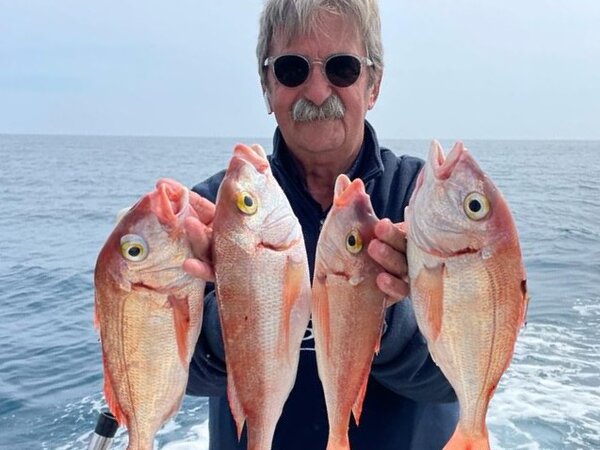
In the Beginning
A piece of cork and some nylon line represent the starting point of bottom fishing from a boat. A few dozen meters of nylon, a sinker, and a simple rig with a few hooks form the basic fishing setup which, despite its extreme simplicity, is highly effective.
In fact, the sensitivity gained by feeling bites directly with your fingers is a valuable learning experience that will be extremely helpful when moving on to more advanced solutions. Building a handline is very easy and a lot of fun. By creating one of the rigs described below, you can tackle fishing grounds up to 20 or 30 meters deep—and even deeper as you gain experience and manual skill.
For those who prefer, ready-made handlines are also available on the market, produced by industry professionals and guaranteed to work effectively.
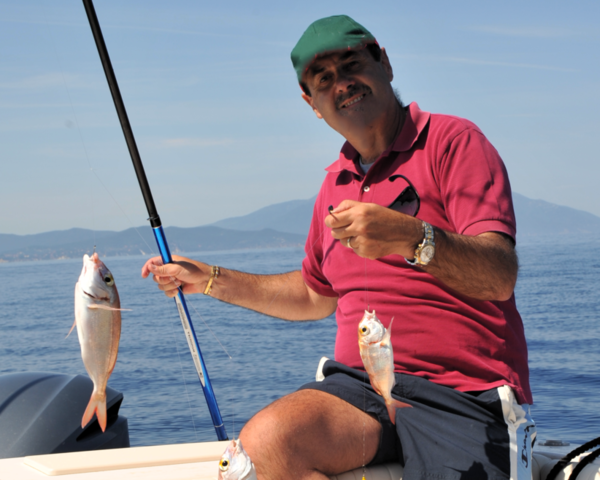
The Rod
The next step is obviously the purchase of a rod and a reel. For beginners, there are two possible approaches.
If you plan to fish seriously, it is best to invest right away in quality equipment—quality that guarantees durability and performance. Those who intend to fish less frequently should still choose decent, entry-level gear that is robust, reliable, and potentially resellable.
Clearly, there is no single rod suitable for all depths and situations. Deep bottom fishing requires specific rods and adequate skills—something that equipment quality alone cannot compensate for. Rods differ mainly in sinker weight capacity and length.
While sinker weight is related to depth and fishing conditions, managing a long rod—sometimes necessary when using long leaders or keeping distance from the boat’s sides—can be demanding without proper technique and sufficient physical endurance.
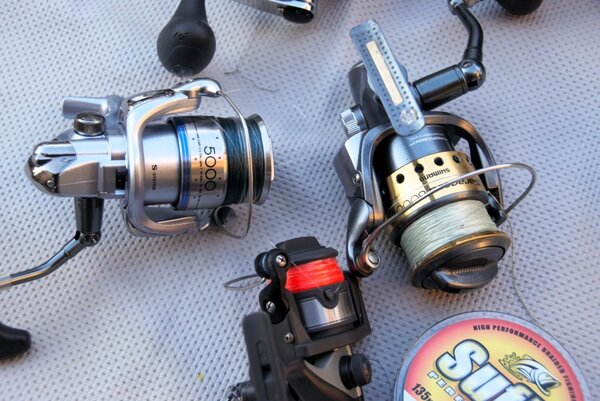
The Reel
The better the reel, the better. Smoothness, correct spool movement, and line capacity are essential features, generally found in branded products (with a few exceptions). Sizes typically range from 5000 up to 8000 for greater depths.
A good reel lasts a lifetime; cheap imitations last only a few months.
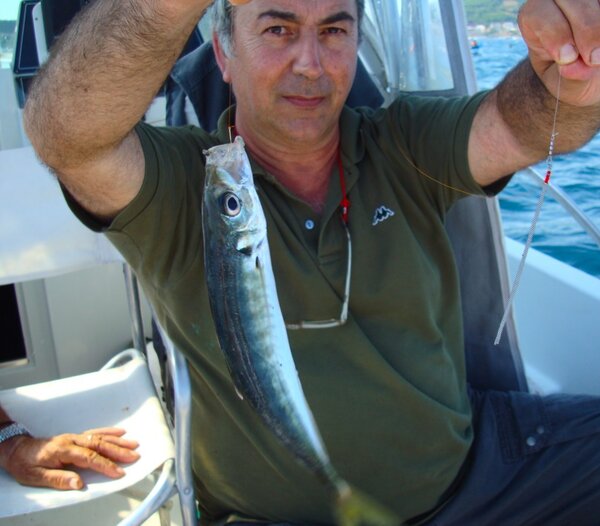
Fishing Lines
There are essentially two choices for spooling a reel: nylon monofilament or braided line. There’s no need to dwell on their characteristics, as they are well known.
Nylon is perfectly suitable for shallower depths, where line length does not make elasticity a limitation in terms of bite detection. On the contrary, its elasticity helps protect against issues caused by snags or particularly stubborn fish.
Additionally, nylon is quieter and does not transmit vibrations, which can be a deciding factor. Diameters between 0.28 mm and 0.35 mm offer a good balance between strength, thickness, and elasticity.
Braided line, for the same breaking strain, is thinner and is the preferred solution for greater depths. It offers less resistance to current and, in some situations, allows the use of lighter sinkers. An 8-strand braid in 0.15–0.18 mm is a solid reference for medium-sized fish and medium depths.
When using braid, it is advisable to add a shock leader—a few meters of nylon—before attaching the terminal, to act as a shock absorber.
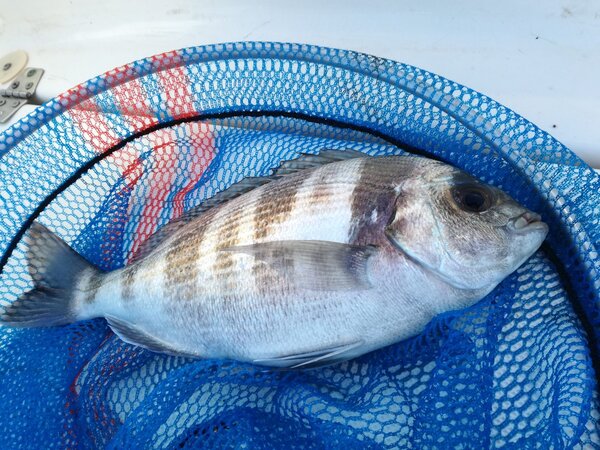
Terminal Rigs
When it comes to terminal rigs, an entire world opens up. The number, position, and length of the hook snoods are the key elements in designing a bottom-fishing rig.
There are various methods to connect the snoods to the main line while allowing full rotation in all directions. Below are some classic setups suitable for many species.
Building these rigs requires a minimum level of manual skill, especially in making snoods that can rotate on two axes to prevent tangles. With experience, longer or even very long snoods can be used, but that is a step best taken after gaining some practice.
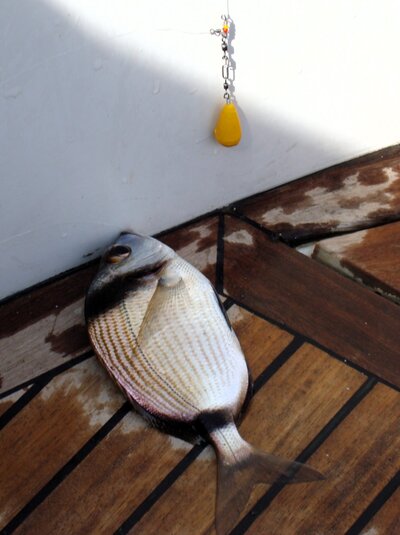
For beginners, ready-made terminal rigs are also available and are highly effective and functional.
Special attention should be paid to hook selection, which must be proportional to the target species and bait used. The market offers many options, but hooks with a wide gape, straight shank, or beak shape are generally recommended.
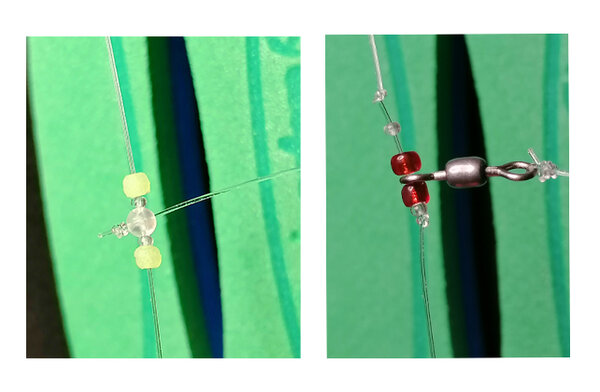
Here are two different methods for connecting the snoods to the main line, ensuring free rotation in all directions.
Below, we present some classic setups that are effective for many species.
The construction requires a certain—albeit modest—level of manual skill, especially when making the snoods, which must be able to rotate on two axes to prevent tangling.
With experience, it will then be possible to use long or even very long snoods, but this is a later step, reached only after gaining some hands-on practice.
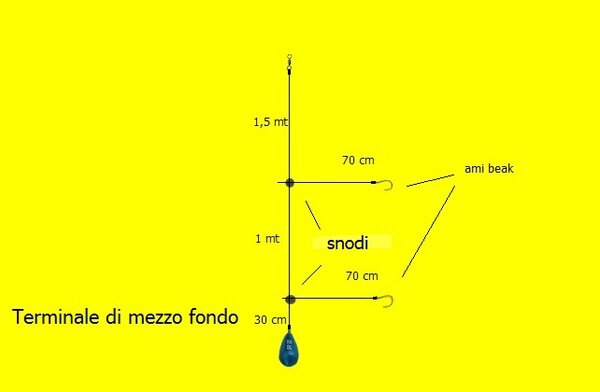
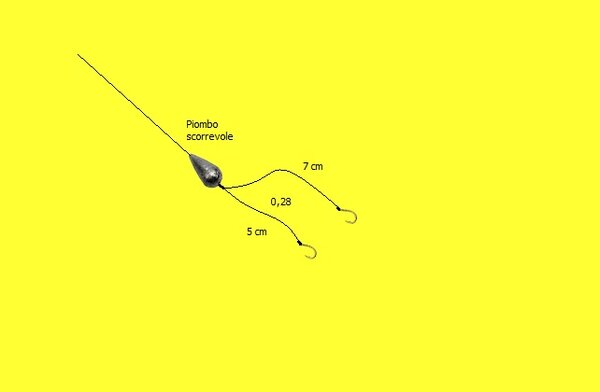
To get started, you can also purchase ready-made terminal rigs, which are very effective and functional.
Special attention should be given to hook selection, which must be proportionate to both the target species and the bait used.
The market offers many options, but it is advisable to choose specific hooks with a wide gape, either straight-shank or beak-style.
Sinkers
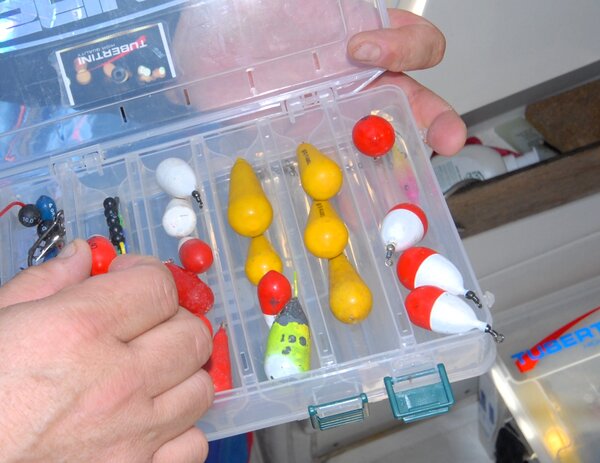
There is no standard weight: the rule is that lighter sinkers are more effective, but it is essential to carry multiple weights to always choose the one that allows you to maintain proper contact with the bottom under varying conditions.
Other related news

12/11/2025
Summer Barbel: Feeder Fishing on the Ticino River

06/12/2025
Squid time
15/07/2025
Spanish Carp on the Fly

01/07/2026
Carpfishing in open waters

31/07/2026
Carpfishing: never give up!

01/12/2025
Expedition Predator Youtube Challenge

03/12/2025
Fishing Beyond Limits

23/02/2026
The lure you can’t buy

23/02/2026
Following the Mediterranean Spearfish

23/02/2026
From Sea to Data: When Recreational Fishing Becomes Science

23/02/2026
When the Sea Changes: Alien Species First Spotted by Fishers

22/11/2025
Ireland, land of pike and dreams

23/02/2026
Carpfishing

08/12/2025
The great challenge
01/10/2025
Catfish angling from a belly boat

13/01/2026
Cape Verde, the paradise of fishing