
The fishing market has never been so rich with possibilities. There are lures for every technique, every species, and every imaginable condition. Some are affordable, others extremely expensive, featuring meticulous carvings and elaborate color patterns, or essential and functional mechanics. Jointed or compact lures, sinking or floating, made of wood, resin, metal, or plastic. The range is so vast it feels complete, as if every need has already found its answer on the shelves.
And yet, among all these possibilities, there is one lure that no one will ever be able to buy. No matter the price, the material, or how much you are willing to spend. You can’t purchase it: it’s the lure you build yourself.
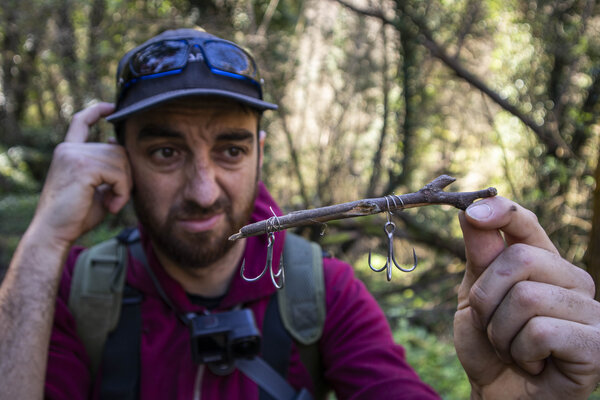
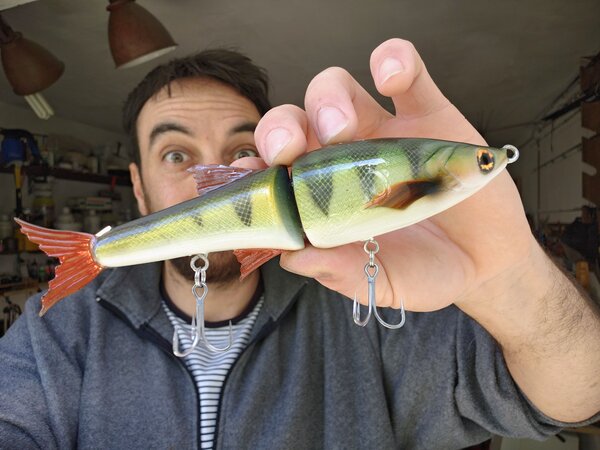
At first glance, one might think that lure building comes from the desire to save money. In reality, the reason is quite different, especially since you often end up spending far more than expected. Building a lure means seeking a satisfaction that goes beyond simply owning an object. It’s the pleasure of creating something designed to produce a tangible result: a catch, certainly, but also a perfect movement in the water, a precise vibration, a balance that has been studied and understood. It is an almost obsessive pursuit of an aesthetic that first satisfies our own creativity, more than it increases our catch rate.
Building your own lure means coming into direct contact with the physics of movement. It means learning how weight, shape, and materials interact, understanding why a lure swims in a certain way and how to modify its behavior. Every attempt becomes an experiment: you observe, adjust, and try again. In this process, practical knowledge develops knowledge born from experience and strengthened over time.
There is also a deeper, more personal aspect. A handmade lure allows you to turn an idea into a real object. It’s not about adapting to what already exists, but about shaping what you have imagined. Lines, proportions, and colors reflect an individual vision. The result often lacks the polished perfection of an industrial product. It may be rougher, less refined, sometimes imperfect, or even non-functional. But it is precisely within this imperfection that its value lies.
A handmade lure is unique. It carries the marks of the process that created it: the choices made, the corrected mistakes, the successful intuitions, and the many failures that precede success. It is a personal object, recognizable, reflecting the character of its maker. When it enters the water, it is not just a fishing tool, but the synthesis of a journey made of curiosity, research, and perhaps even a few cuts on your fingers.
When a catch comes on a self-built lure, the satisfaction takes on a different meaning. It is not merely the result of effective technique, but confirmation that an idea developed with your own hands can work in the real world. It is the moment when theory and practice meet and find balance. A feeling difficult to describe, yet instantly recognizable to anyone who has experienced it.
In a sector dominated by mass production, lure building represents a space of creative freedom. It does not replace industry, but complements it, offering anglers the opportunity to explore, understand, and invent. Events such as Pescare Show Rimini 2026 celebrate precisely this dimension.
The Social Media Village stand, in addition to being a meeting point for video creators, has also become a gathering place for small and medium artisans who meet each year to share ideas and showcase their latest creations. Here, every lure tells a story made of attempts and personal solutions—small masterpieces, more or less perfect.
Because among all the lures available on the market, there is one that retains a special value. It is not the most expensive, nor the most refined. It is the one born from an idea turned into matter, built to answer a precise vision.
It’s the lure you can’t buy.
Other related news

12/11/2025
Summer Barbel: Feeder Fishing on the Ticino River

12/01/2026
Bottom Fishing for Everyone

06/12/2025
Squid time
15/07/2025
Spanish Carp on the Fly

01/07/2026
Carpfishing in open waters

31/07/2026
Carpfishing: never give up!

01/12/2025
Expedition Predator Youtube Challenge

03/12/2025
Fishing Beyond Limits

23/02/2026
Following the Mediterranean Spearfish

23/02/2026
From Sea to Data: When Recreational Fishing Becomes Science

23/02/2026
When the Sea Changes: Alien Species First Spotted by Fishers

22/11/2025
Ireland, land of pike and dreams

23/02/2026
Carpfishing

08/12/2025
The great challenge
01/10/2025
Catfish angling from a belly boat

13/01/2026
Cape Verde, the paradise of fishing