
Paraphrasing a famous biscuit advertisement, we could say that in winter “it’s always time for calamari”…
From dusk until the next sunrise, the squid become active and move from deeper waters toward the nearshore to prey on small fish, which linger in shallow waters or near the surface.
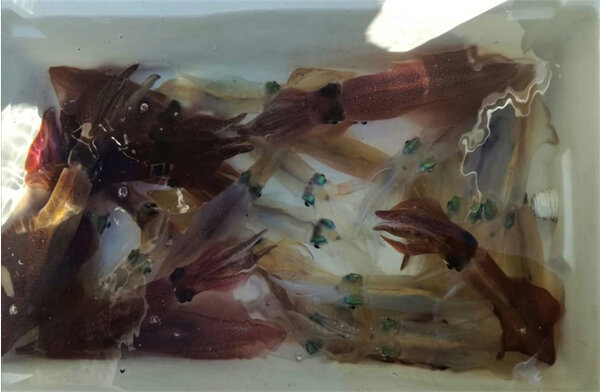
In this article, we will explain, from the very beginning, the basic technique for trolling for squid—perfect for those who are complete beginners and want to venture into the nocturnal world of these night-time hunters.
Trolling is a very productive technique because by exploring a large area of sea at various depths, it is easier to encounter groups of hunting squid.
Night trolling can certainly be a bit challenging, especially for beginners, but with some organization and practice, and a few sessions, you will gain confidence moving in the darkness.
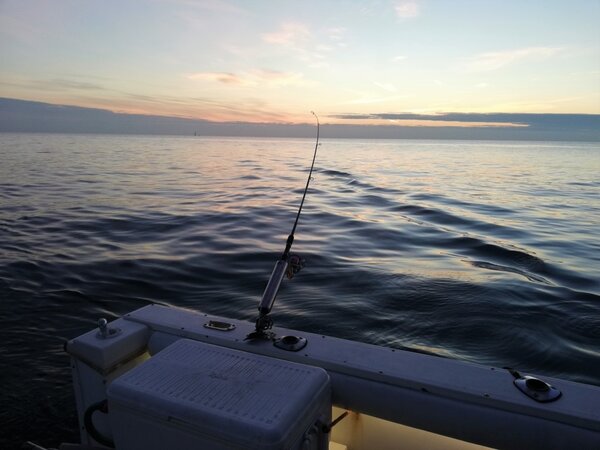
How to Prepare
First, you’ll need a boat capable of moving at low speed between two and three knots, equipped with the required navigation lights for night sailing, because safety is essential.
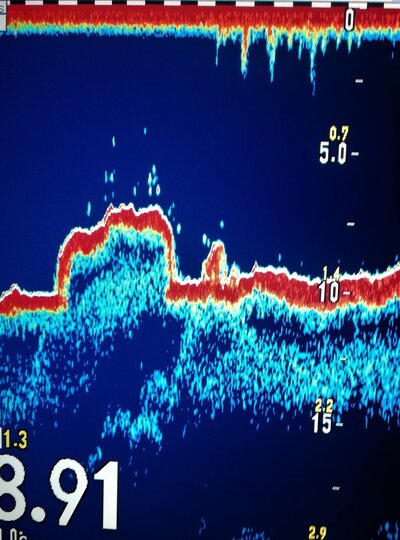
Then, you’ll need a mid-range fish finder that can read the seabed well, and a good chartplotter, which will be crucial.
In fact, if you are new and unfamiliar with the fishing area, you’ll need to apply some small precautionary strategies.
Scout the fishing zones, marking interesting spots—usually depth changes and areas with mixed seabed—from 20–25 meters and deeper.
Especially on early trips, it’s wise to create markers and a route to follow while there is still ample light, to check for nets, stakes, or other potentially hazardous obstacles that are hard to avoid in the dark.
It’s All About Light
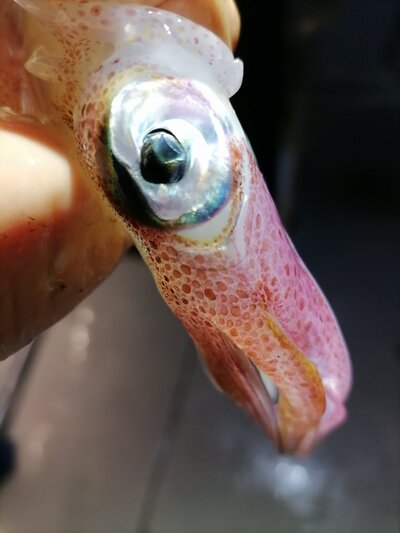
Many believe that light attracts squid.
This is false… light attracts baitfish, and the baitfish attract the cephalopods.
This is why the lighting of coastal structures plays a key role in locating these “rubbery hunters.”
As darkness increases, squid approach the shore or rise in the water column, and naturally, their presence is always near their prey, which are attracted to reflected light.
Moonlight also has a real impact, significantly contributing to squid activity.
What You Need
To start, we’ll fish with only two rods at a time. Two spinning rods, 240 cm, 15–40 g, equipped with 4000-size reels and 15 lb braid or similarly thin line, will work perfectly.
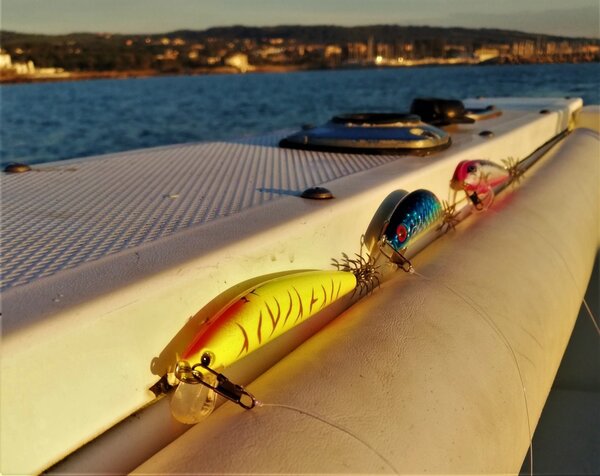
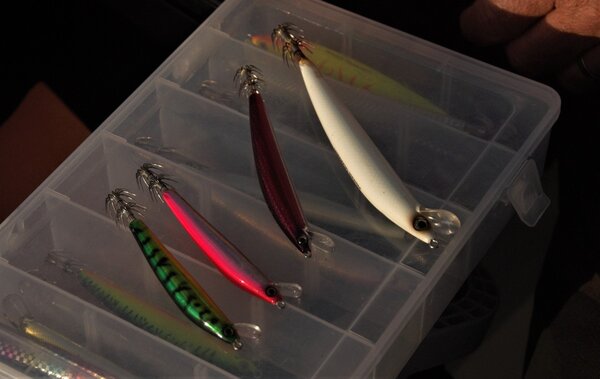
The key to this fishing is the lures.
Their balance and swimming action really make a difference, especially when squid are scarce or not in a feeding frenzy.
When activity is high, catching them isn’t difficult because squid are aggressive feeders. But during lulls or when fewer squid are present, lures are crucial.
The main factor in choosing a good minnow lure is, unfortunately, price and brand—though sometimes cheaper lures can work just as well.
Next, you’ll need small sinkers—pear-shaped with a ring are ideal—to help the rigs sink. Stock up on pear sinkers in 50, 70, 100, 150, and 200 g.
Leaders
For the first fishing sessions, it’s best to use easy-to-manage leaders, avoiding setups with multiple lures, which are hard to handle at night and prone to snagging in shallow waters, often resulting in lost rigs and a hit to the wallet.
Stick to the setups shown below, using one or two minnows, weighted with a sinker mounted like a “guardian.”
Lengths and sizes are illustrated in the images below.


Fishing Technique
Spending some time over snag-free areas to check how the rigs sink is crucial, because blind attempts—especially over shallow, complex seabeds—can easily lead to snags, particularly during turns.
Once in the area, start by lowering the two rods: one near the surface and one deeper, to probe two layers of water.
Reasonably, start sinking the deeper rig to about half or slightly more than the water depth, while keeping the shallow rig 2–3 meters below the surface.
Turns should always be made on the side of the heavier weight.
The catches will indicate the evening’s trend, and you can adjust with different weights and depths.
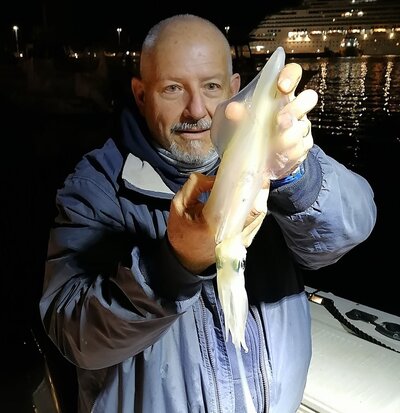
Squid strikes are fast and aggressive, and the rod will signal this with a very noticeable bend.
Retrieve should be done with the reel, steady and consistent, and the net will finalize the catch.
Other related news

12/11/2025
Summer Barbel: Feeder Fishing on the Ticino River

12/01/2026
Bottom Fishing for Everyone
15/07/2025
Spanish Carp on the Fly

01/07/2026
Carpfishing in open waters

31/07/2026
Carpfishing: never give up!

01/12/2025
Expedition Predator Youtube Challenge

03/12/2025
Fishing Beyond Limits

23/02/2026
The lure you can’t buy

23/02/2026
Following the Mediterranean Spearfish

23/02/2026
From Sea to Data: When Recreational Fishing Becomes Science

23/02/2026
When the Sea Changes: Alien Species First Spotted by Fishers

22/11/2025
Ireland, land of pike and dreams

23/02/2026
Carpfishing

08/12/2025
The great challenge
01/10/2025
Catfish angling from a belly boat

13/01/2026
Cape Verde, the paradise of fishing